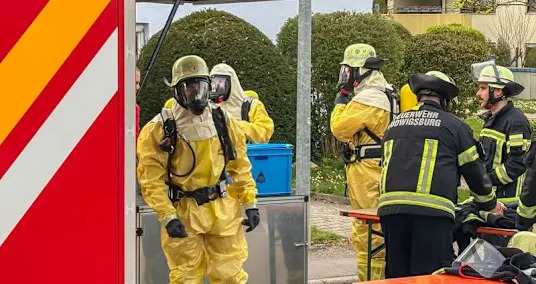
An Easter egg hunt in south-western Germany took a worrying turn on Sunday when two men discovered a vial labelled "Polonium 210" in a garden, triggering an emergency response as authorities tested for the potentially lethal radioactive substance.
District fire chief Andy Dorroch said initial on-site measurements were carried out to detect radioactivity, but all of them came back negative. He added that the two men were unharmed.
The discovery led to a large-scale operation involving the fire brigade and police in the town of Vaihingen an der Enz, north-west of Stuttgart.
It remains unclear whether the 50-millilitre vial actually contained polonium 210.
The fire brigade will secure the vial in accordance with safety precautions, the fire chief said.
Reports said the area around the site where the bottle was found was cordoned off.
According to the Federal Office for Radiation Protection (BfS), the chemical element polonium is particularly dangerous if inhaled or absorbed through the skin via open wounds.
latest_posts
- 1
 Jupiter and the moon take a sunset stroll on March 26. Here's how to see it
 - 2Electric discovery on Mars! Scientists find tiny lightning bolts coming from Red Planet dust clouds
- 3'Wicked: For Good' was filmed at this surreal National Park in Egypt
- 4What will happen if Artemis 2 astronauts get hit by a solar storm during NASA's ambitious moon mission?
- 5How Trump's marijuana executive order could change medical research landscape





- Why More Couples Are Choosing Africa For Their Honeymoon
- This St Nick Truly Can Advise How To Drink And Hack Your Headache
- Spots To Go Birdwatching All over the Planet
- See as Your #1: These Low-Sugar Food sources You Ought to Attempt
- Most loved Road Food: Which One Prevails upon You?
- Consumers advised to dispose of 19 cooking pans due to lead leaching risk, FDA reports
- Turning to turkey’s tryptophan to boost mood? Not so fast
- Canada cancels its 1st moon rover: 'It's hopefully not a lost cause'
- Netflix's 'Lord of the Flies' show blends 'Adolescence' and 'Yellowjackets'